

Yacht Brokerage vs. Private Sale: The Comprehensive 2026 Guide to Selling Your Vessel
Could the commission you hope to save by selling your vessel yourself actually cost you six figures in lost equity and unforeseen legal liabilities? It's a question many owners face as they look at the 10% industry standard commission and wonder if they can manage the process alone. While the DIY approach seems straightforward, the choice between a yacht brokerage vs private sale involves much more than just a listing fee. In a 2026 market where buyers are more analytical and due diligence is more rigorous than ever, the path you choose dictates your security and your final return.
You likely feel that no one knows your boat better than you do, and you are right. However, managing unqualified tire-kickers and navigating the complexities of maritime escrow can quickly become overwhelming. This guide provides a clear comparison to help you maximize your sale price while ensuring a legally binding, secure transaction. We'll explore how professional representation handles everything from immersive 3D virtual tours to the latest 2026 tax regulations, allowing you to move on to your next adventure without the stress of a failed closing.
Key Takeaways
- Learn why the choice between yacht brokerage vs private sale often determines whether you net the highest market value or settle for an unvetted, lower offer.
- Discover how professional escrow management and title verification eliminate the legal pitfalls and financial risks inherent in direct seller-to-buyer transactions.
- Evaluate your vessel's market position using the $50,000 value threshold and your own time availability to decide if professional representation is a strategic necessity.
- See how immersive 3D virtual tours and 40 years of market expertise expand your buyer pool globally while filtering out unqualified inquiries.
- Understand why the standard commission is a reinvestment in expert negotiation that frequently results in a higher net return than a private listing.
Understanding the Foundations: Brokerage vs. Private Sale
The decision to sell your vessel is rarely just about the price tag. It represents a transition in your maritime lifestyle that requires a disciplined approach to legal and financial details. When evaluating a yacht brokerage vs private sale, you're choosing between a managed, fiduciary relationship and an unguided, direct transaction. In 2026, the maritime market requires more than just a "For Sale" sign. It demands digital transparency, verified service records, and a global reach that few individual sellers can achieve on their own. Understanding these two distinct paths is the first step toward a successful exit.
The Role of the Yacht Broker as a Fiduciary
A yacht broker serves as a professional intermediary managing market analysis, marketing, and closing logistics. This relationship is built on a foundation of fiduciary duty, which is a legal obligation to act solely in your best interest throughout the negotiation. When you ask, What is a Yacht Broker? you'll find they're much more than just a salesperson. They act as a mentor through complex title transfers and evolving international regulations. By choosing professional brokerage services, you gain access to proprietary market data and a network of qualified buyers that aren't available to the general public. This structured environment ensures that every step adheres to the highest ethical standards, providing a layer of security that private transactions simply cannot replicate.
The Anatomy of a Private Sale
The primary appeal of a private sale is the perceived savings on commission. Sellers often believe they can net a higher return by handling the process themselves. However, the "For Sale By Owner" route places the entire administrative burden on your shoulders. You become responsible for high-quality photography, listing fees on multiple platforms, and the constant screening of leads. The private market is often saturated with "tire-kickers" and individuals who lack the financial readiness to close. Without a professional buffer, you'll spend hours answering basic questions that a broker would've filtered out before they ever reached your inbox. This "caveat emptor" environment also lacks the security of an audited escrow account, leaving both parties vulnerable to financial disputes or undisclosed vessel defects. While it feels like you're saving money upfront, the time investment and risk of a failed closing often outweigh the initial benefits.
Risk Management: Escrow, Title, and Legal Safety
Handshake deals may feel personal, but they're ill-suited for the complexities of a 2026 maritime transaction. When you compare a yacht brokerage vs private sale, the most profound difference lies in the layer of legal and financial protection provided to both parties. A professional sale isn't just a change of hands. It's a verified, documented transfer of a high-value asset that must be free of encumbrances and future liabilities. Without a professional intermediary, both the buyer and seller are exposed to risks that can linger long after the boat has left the dock.
Escrow: The Buffer Between Buyer and Seller
Sending a significant deposit directly to a private individual is a high-risk maneuver. If the sea trial reveals catastrophic engine issues or the survey uncovers structural rot, the buyer needs a guaranteed path to a refund. Brokers use dedicated, audited escrow accounts to hold these funds. This neutral territory ensures money only moves once every closing condition is met. In a private sale, you lack this buffer. If a dispute arises during the inspection phase, the buyer often finds themselves chasing a seller who may have already committed those funds elsewhere.
An advantage often missed in the yacht brokerage vs private sale discussion is the role of the buyer's broker. While the listing agent represents the seller, a buyer's broker provides a separate layer of due diligence. In a private transaction, the buyer usually lacks this professional advocate, leading to increased friction and potential errors in the paperwork. Managing these complex acquisitions is a core part of expert buyer representation, ensuring that every deposit is protected by industry-standard protocols and ethical guidelines.
Title Integrity and Liability
Maritime liens are particularly treacherous because they follow the vessel, not the owner. A boat can have hidden debt from unpaid repair bills, dockage fees, or previous financing that doesn't appear on a basic registration card. Professional brokers conduct thorough title searches and lien verifications to ensure a clean transfer. This process protects the buyer from inheriting debt and shields the seller from post-sale liability claims. Proper documentation, including USCG-compliant Bills of Sale and tax affidavits, creates a permanent legal record of the transaction. The Brokerage Lifestyle is defined by this peace of mind; it allows owners to focus on their next vessel while professionals handle the administrative minefield of maritime law.
- Closing Documentation: Brokers prepare all necessary USCG and state-level forms to ensure tax compliance and proper registration.
- Survey Management: We coordinate with accredited surveyors to provide an objective analysis of the vessel's condition without emotional bias.
- Lien Satisfaction: We ensure all existing mortgages and liens are paid off and released before the title is officially transferred.
If you're unsure about the current status of your vessel's documentation, it's wise to consult with a professional who can conduct a preliminary title review before you list. You can review our seller representation services to see how we secure your equity and minimize your legal exposure during the sale.
The Financial Equation: Commission vs. Final Sale Price
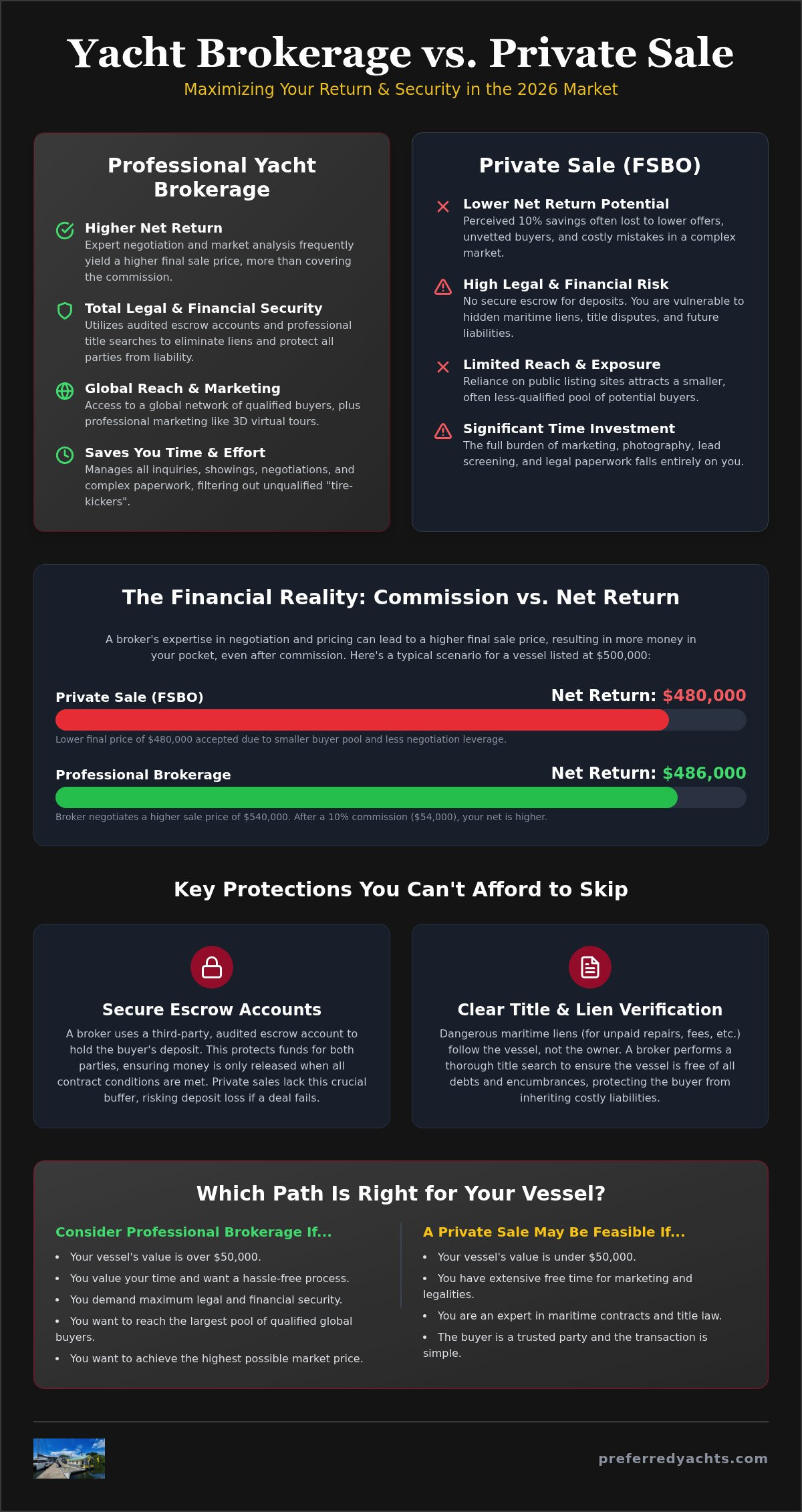
The financial debate surrounding a yacht brokerage vs private sale usually centers on the standard 10% commission. While this figure seems like a significant expense, viewing it as a cost rather than an investment in equity is what we call the "10% Myth." In practice, an unrepresented seller often leaves more than 10% on the table through inaccurate pricing and poor negotiation. A professional broker doesn't just list a boat; they manage the vessel's market position to ensure the final net return is higher than what an owner could achieve alone.
Accurate pricing is the cornerstone of a successful sale. Private sellers typically rely on public "asking prices" found on listing sites, which are often inflated and don't reflect actual market reality. Brokers utilize proprietary databases, such as SoldBoat, which provide verified closing prices for similar vessels. This data driven approach prevents the two most common financial pitfalls: overpricing, which leads to a stagnant listing, and underpricing, which results in a fast sale but lost equity. By aligning the vessel's price with current market absorption rates, a broker creates a competitive environment that favors the seller.
Marketing in 2026: Beyond Basic Photos
The digital landscape of 2026 has fundamentally changed how buyers discover and vet vessels. High-quality photography is now the bare minimum. To truly stand out, a listing requires 3D virtual tour production to provide an immersive, transparent experience for remote buyers. These high-fidelity digital walkthroughs allow a buyer in another country to inspect the engine room or the condition of the upholstery from their home. This level of detail builds immediate confidence and often leads to remote offers. For the seller, this means fewer "wasted" weekend showings and a much higher caliber of lead. DIY listings that rely on smartphone photos often languish for months, losing value as they age on the market.
Negotiation and Closing Efficiency
Negotiation is a psychological game that's difficult to play when you're emotionally attached to the vessel. Buyers tend to negotiate more aggressively with private sellers, sensing a lack of market data or a desire for a quick exit. A broker acts as a professional buffer, pushing back on low-ball offers with hard data and technical expertise. A broker’s market analysis typically secures a sale price 5-15% higher than unrepresented listings. Beyond the price, you must consider the value of your time. Managing inquiries, coordinating surveys, and chasing paperwork can easily consume 20 or more hours a month. When you calculate your own hourly rate, the "savings" of a private sale often vanish, leaving you with more stress and a lower net return.
Decision Framework: Which Path is Right for Your Vessel?
Choosing between a yacht brokerage vs private sale requires an objective assessment of your vessel and your personal bandwidth. Not every boat needs a broker, but most high-value assets benefit significantly from one. The $50,000 mark is generally considered the threshold for professional need. Below this price point, the simplicity of the transaction might justify a DIY approach. Above it, the financial and legal risks increase to a point where professional oversight becomes a vital form of insurance for your equity. You're no longer just selling a boat; you're managing a complex financial transfer.
Time is the second critical variable in this framework. Don't underestimate the effort needed to screen leads and manage schedules. If you can't commit 20 or more hours a month to phone calls, emails, and physical showings, your listing will likely stagnate. You also need to consider the technical state of the vessel. Boats with complex power systems, existing maritime liens, or international registration issues require a level of expertise that most private sellers don't possess. In a 2026 market, buyers are more discerning, and they'll walk away from any listing that feels disorganized or legally opaque.
When to Choose a Private Sale
A private sale is often appropriate for small, trailerable boats with clear titles and a strong local buyer pool. These transactions are typically straightforward and don't require the global reach of a professional network. If you're selling to a trusted family member or a close friend, the need for a professional buffer is also reduced. Finally, if you have extensive experience in maritime law and high-end digital marketing, you might have the tools to manage the process yourself. However, even in these cases, the lack of a neutral escrow account remains a significant risk for both parties.
When Professional Brokerage is Essential
For luxury sail and power yachts, buyers expect a professional, curated experience. They want verified records, secure escrow, and a clear title transfer. If you're looking for a "done-for-you" solution that handles everything from market analysis to the final closing, a broker is indispensable. This is especially true for vessels that require 3D virtual yacht tours to attract buyers from across the country. High-fidelity digital walkthroughs prove the vessel's condition before a buyer ever books a flight, making them essential for a national sale. This technology bridges the gap between a remote inquiry and a signed contract.
If you're ready to see how professional representation can streamline your exit and protect your investment, review our comprehensive seller representation services to find the best path for your vessel.
Professional Representation as a Strategic Asset
Choosing professional representation is a decision to prioritize your peace of mind and the long term security of your equity. At Preferred Yachts, our foundation is built on more than 40 years of integrity and professional representation. Since 1984, we've acted as a steady hand for sellers through every type of market shift. When you evaluate the choice of a yacht brokerage vs private sale, you aren't just comparing fees. You're deciding whether you want a mentor style advisor or if you're prepared to manage the complex psychological and technical hurdles of a high value transaction alone.
A strategic partnership does more than just list your vessel; it positions it as a premium asset. We don't just wait for buyers to find us. We actively bring the vessel to the buyer, regardless of where they're located in the country. This global reach is paired with personalized buyer representation that focuses on finding the right yacht for the right owner. By managing the entire process from the initial market analysis to the final sea trial and closing, we ensure a seamless transition of ownership that protects both parties from post sale disputes.
The Future of Yacht Sales: 3D Technology
The digital landscape of 2026 demands more than static imagery. Our specialized 3D virtual tour production has become the ultimate tool for remote buyers. These immersive walkthroughs allow a prospect to conduct a thorough remote inspection before they ever set foot on your deck. This technology significantly reduces "showing fatigue" for sellers. You won't spend your weekends preparing the boat for casual onlookers. Instead, every physical showing is with a pre-qualified buyer who has already "walked" the vessel virtually and is ready to move toward an offer. High fidelity digital production elevates your boat above the noise of standard listings, signaling to the market that your vessel is a top tier offering.
A Seamless Experience from Search to Survey
Coordinated transaction management is what separates a successful closing from a deal that falls apart at the last minute. We act as a professional buffer during the sea trial and survey phase. These moments are often emotional for owners; having a calm, experienced advisor ensures that technical findings are handled with logic rather than impulse. We believe a mentor style approach is always more effective than a high pressure sales pitch. Our goal is to provide you with the information and security you need to make an informed decision. If you're ready to see the difference that 40 years of expertise makes, you can explore our current brokerage listings and 3D tours to see how we present our clients' vessels to the world.
Securing Your Maritime Legacy
Navigating the complexities of a vessel transfer requires more than just a willing buyer. The choice between a yacht brokerage vs private sale ultimately defines the security of your equity and the legacy of your ownership. By prioritizing professional escrow management and clear title verification, you eliminate the legal vulnerabilities that often haunt direct transactions. Modern marketing tools, specifically immersive 3D walkthroughs, ensure your vessel reaches a global audience while filtering out unqualified inquiries before they ever reach your dock.
Preferred Yachts offers a stable, mentor-led approach backed by over 40 years of maritime expertise. We combine cutting edge 3D virtual tour technology with comprehensive transaction management to ensure your sale is as seamless as it is profitable. Whether you're moving toward a larger vessel or transitioning to a new chapter, having a trusted advisor by your side makes all the difference. Our commitment to professional integrity ensures that every detail, from the initial market analysis to the final closing document, is handled with precision.
Partner with Preferred Yachts for Expert Representation and discover the peace of mind that comes with professional excellence. Your next adventure is waiting on the horizon, and we're here to help you reach it with confidence.
Frequently Asked Questions
Is a yacht broker worth the 10% commission?
A broker is worth the investment because they often secure a final sale price that nets you more than a DIY listing. They use proprietary data to price your vessel accurately and handle the time-consuming lead screening that private sellers find overwhelming. By managing the technical and legal hurdles, they prevent the common mistakes that lead to lost equity or post sale disputes.
How do I sell my yacht privately without getting scammed?
You must use a verified third party escrow service to handle all deposits and final payments. Never release the title or the vessel until funds are fully cleared and confirmed by your bank. Verifying a buyer's identity and proof of funds before scheduling a sea trial is also a critical step in maintaining your security during a private transaction.
What paperwork is required for a private yacht sale?
A successful sale requires a notarized Bill of Sale, the original Title or USCG Certificate of Documentation, and a Release of Lien if a mortgage existed. You'll also need state-specific tax forms and registration transfer documents to ensure you're no longer liable for the vessel. Missing any of these documents can lead to significant legal and financial delays during the transfer process.
Do I need a broker if I am buying a yacht from a private seller?
Engaging a professional for buyer representation is a strategic move that protects you from inheriting hidden debts or structural issues. A broker conducts a thorough title search and coordinates a professional survey to verify the vessel's true condition. Their fiduciary duty is to you, ensuring that you don't overpay or accept a vessel with undisclosed maritime liens.
How long does it typically take to sell a yacht with a broker vs. privately?
The timeline for a yacht brokerage vs private sale varies, but brokers generally close deals faster through global MLS access and professional networks. Private listings often sit for months because they lack the high-fidelity marketing and digital reach required to attract serious buyers. A broker’s ability to pre-qualify leads also prevents the "showing fatigue" that stalls many private sales.
What is the role of a buyer’s broker in a yacht transaction?
A buyer's broker acts as your expert mentor, managing the search, negotiation, and closing logistics on your behalf. They analyze survey findings to negotiate necessary repairs or price reductions, ensuring the deal remains fair. Their presence provides a layer of professional oversight that is especially valuable when dealing with complex systems or international registrations.
How does a 3D virtual tour help sell my yacht faster?
A 3D virtual tour provides an immersive experience that allows buyers to inspect the vessel remotely with total transparency. This technology pre-qualifies prospects by showing them every detail of the engine room and cabin before they travel for a physical showing. By building immediate trust, these tours often lead to faster offers and a shorter overall time on the market.
Who pays the yacht broker commission, the buyer or the seller?
The seller pays the commission, which is typically split between the listing broker and the buyer's broker at the time of closing. This structure allows buyers to have professional representation without an additional upfront cost. It creates a balanced environment where both the buyer and seller have expert advisors managing the technical and legal complexities of the transaction.